Table of Contents
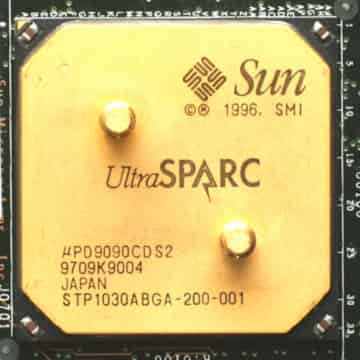
RISC / RISC-V
Reduced Instruction Set Computing 5
RISC-V is based on the Reduced Instruction Set Computing (RISC) design principle, which emphasizes simplicity and modularity in instruction set architecture.
Arduino Nano and other ATmega328(p)/4809 are a classic 'Enhanced' RISC architecture - Single core, low clock speed, but one instruction per cycle (extreme efficiency)
The RISC-V instruction set architecture (ISA) is an open-source, free-to-use, and royalty-free architecture for computer
processors. Developed by the University of California, Berkeley's Computer Science Division. Development of RISC-V began in 2009 as a research project to create a low-power, high-performance processor that could be used in a wide range of applications.
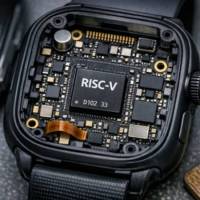 The initial goal was to create an architecture that could be easily modified and customized for specific use cases. Today, RISC-V is widely adopted across various industries, including embedded systems, data centers, and mobile devices. RISC-V chips power everything from insulin pumps and pacemakers to the specialized AI datacenter processing chips.
The core principles of RISC-V include:
- Load-store architecture: Data is loaded into registers before performing arithmetic operations.
- Fixed-length instructions: Instructions have a fixed length, making them easier to decode and execute.
- Instruction-level parallelism: Instructions can be executed in parallel, improving performance.
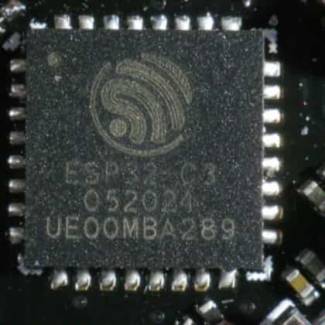 RISC-V's Relationship with the ESP32 Family
The ESP32 family of microcontrollers, developed by Espressif Systems, uses the RISC-V architecture for its processor core.
Specifically:
RISC-V's Relationship with the ESP32 Family
The ESP32 family of microcontrollers, developed by Espressif Systems, uses the RISC-V architecture for its processor core.
Specifically:
These systems DO NOT have a RISC-V CPU, but have XTENSA architecture instead:
The use of RISC-V in the ESP32 family provides several benefits, including:
- Low power consumption: RISC-V's design emphasizes low power usage, making it suitable for battery-powered devices.
- Flexibility: RISC-V can be easily modified and customized to suit specific requirements.
- Open-source nature: The open-source license allows developers to contribute to the architecture and create custom extensions.
- Lower licensing costs: As RISC-V is royalty-free, manufacturers can save on licensing fees.
- Increased customization: The open-source nature allows for easier modification and customization of the architecture.
- Improved security: RISC-V's design principles emphasize secure execution, making it more resistant to attacks.