ESP32 (Original / WROOM1)
The ESP32 is a low-cost, low-power System-on-Chip (SoC) developed by Espressif Systems. It was first announced in 2016 and released to the public in 2017.
Technical Specifications The ESP32 features a dual-core 32-bit LX6 microprocessor running at up to 240 MHz, with a separate coprocessor for peripheral interfaces. It includes 520 KiB of internal RAM, as well as 448 KiB of flash memory and an additional 16 MiB of external SPI flash memory. The chip also features Wi-Fi (802.11b/g/n) and Bluetooth Low Energy (BLE) modules with support for BLE's SPP and GATT profiles.
Origins/History
Espressif Systems, had previously developed several successful low-cost 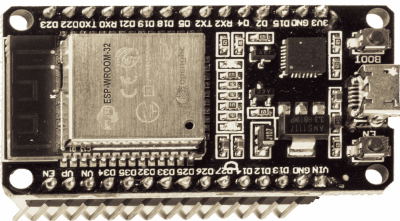 products, including the ESP8266 Wi-Fi module. The ESP32 is an extension of this line of products and offers significant improvements over its predecessor, including increased processing power, memory capacity, and integration with additional peripherals such as Bluetooth Low Energy (BLE) and dual-mode 802.11b/g/n Wi-Fi.
XTensa Platform The ESP32's processor core is based on the XTensa LX6 microprocessor architecture, a RISC-V variant developed by Espressif Systems in partnership with Tensilica (now Cadence Design Systems). The XTensa LX6 provides a high level of instruction set compatibility with other RISC-V processors and offers improved performance and efficiency compared to previous ESP8266 products. The Xtensa architecture allows designers to add custom instructions and features, enabling Espressif to optimize the core for low-power wireless applications. In the ESP32, the LX6 operates at up to 240 MHz while also supporting an ultra-low-power coprocessor for sensor monitoring during sleep. Later variants like the ESP32-S3 moved to an Xtensa LX7 core with vector instructions for machine learning acceleration, and the ESP32-C3 introduced a RISC-V CPU option
Relationship to Other ESP32 Products The ESP32 has spawned several variants designed for specific use cases/markets, and general platform updates, like a recent move to RISC-V to decrease cpu licensing costs. For more information on the ESP32 family or comparison chart, please refer to this page
Impact on the IoT World The ESP32's impact on the IoT world has been transformative. By integrating Wi-Fi and Bluetooth into an accessible, affordable package, it eliminated the need for separate wireless modules and dramatically lowered the barrier to entry for connected device development. The chip has become a cornerstone for smart home devices, industrial automation, wearable technology, and environmental monitoring systems. Its compatibility with the Arduino IDE, MicroPython, and a mature open-source ecosystem has fostered a global community of millions of developers who share code, libraries, and project ideas. This ecosystem has accelerated IoT prototyping and enabled the rapid deployment of commercial products, from smart plugs to agricultural sensors.
In less than a decade, the ESP32 has grown from a niche Chinese SoC into a ubiquitous building block of the Internet of Things.
Its ongoing evolution—through variants like the ESP32-S3 with AI acceleration and the RISC-V-based ESP32-C3—continues to push the boundaries of what low-cost wireless microcontrollers can achieve. As the IoT landscape expands into areas like edge AI and the Matter smart home standard, the ESP32's blend of performance, affordability, and community support ensures it will remain a central player in connecting the physical world to the internet.
 mrmaxthemac